

The EU India trade deal is poised to bring about substantial tariff cuts on a wide range of food and beverage products, fundamentally reshaping trade dynamics between the two economic powerhouses and significantly enhancing market access for both producers and consumers. This landmark agreement is set to dramatically reduce import duties on popular European goods. …
EU-India Trade Deal Set to Slash Tariffs on Wine, Olive Oil and Processed Foods
👁 Views:
1571
January 27, 2026,
9:30 pm
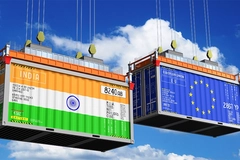
The EU India trade deal is poised to bring about substantial tariff cuts on a wide range of food and beverage products, fundamentally reshaping trade dynamics between the two economic powerhouses and significantly enhancing market access for both producers and consumers. This landmark agreement is set to dramatically reduce import duties on popular European goods.
A free trade agreement (FTA) between India and the European Union (EU) could lead to substantial tariff cuts on a wide range of food and beverage products, reshaping trade between the two regions and increasing market access for producers and consumers. Once ratified by India’s Cabinet, the European Parliament and the Council, the deal is expected to eliminate tariffs worth up to €4 billion (about $4.75 billion) on EU exports.
Under the agreement, import duties on European food products like wine, spirits and beer will fall sharply — with wine tariffs dropping from historically high levels to around 20%–30%, spirits to about 40%, and beer tariffs reduced to roughly 50%.
Other categories set to benefit include olive oil, margarine and other vegetable oils, whose levies may be eliminated entirely over a phased timeline, and processed foods such as bread, pasta, biscuits, pastries, chocolate and pet food, which are slated to become tariff-free. These cuts are expected to significantly widen consumer choice and potentially reduce retail prices in India.
The deal also aims to expand market access for Indian food exports — such as spices, tea and specialty products — into the EU, enhancing opportunities for Indian producers to tap into European markets. Additional cooperation on harmonised food safety standards and labelling may further simplify cross-border trade, though exporters will need to adapt to the EU’s stringent regulations.
While some European agricultural sectors such as dairy and sugar were excluded to protect sensitive domestic industries, broader tariff reductions are seen as a major step toward bolstering bilateral food and beverage trade and strengthening economic ties between India and the EU.
Key Product Categories Affected by Tariff Reductions
A free trade agreement (FTA) between India and the European Union (EU) could lead to substantial tariff cuts on a wide range of food and beverage products, reshaping trade between the two regions and increasing market access for producers and consumers. Once ratified by India’s Cabinet, the European Parliament and the Council, the deal is expected to eliminate tariffs worth up to €4 billion (about $4.75 billion) on EU exports. This significant financial impact underscores the importance of the EU India trade deal.
Benefits for Indian Exporters
Under the agreement, import duties on European food products like wine, spirits and beer will fall sharply — with wine tariffs dropping from historically high levels to around 20%–30%, spirits to about 40%, and beer tariffs reduced to roughly 50%. Other categories set to benefit include olive oil, margarine and other vegetable oils, whose levies may be eliminated entirely over a phased timeline, and processed foods such as bread, pasta, biscuits, pastries, chocolate and pet food, which are slated to become tariff-free. These cuts are expected to significantly widen consumer choice and potentially reduce retail prices in India.
Challenges and Considerations for the EU India Trade Deal
The deal also aims to expand market access for Indian food exports — such as spices, tea and specialty products — into the EU, enhancing opportunities for Indian producers to tap into European markets. Additional cooperation on harmonised food safety standards and labelling may further simplify cross-border trade, though exporters will need to adapt to the EU’s stringent regulations. While some European agricultural sectors such as dairy and sugar were excluded to protect sensitive domestic industries, broader tariff reductions are seen as a major step toward bolstering bilateral food and beverage trade and strengthening economic ties between India and the EU.
Conclusion
In conclusion, the EU India trade deal represents a significant step forward in strengthening bilateral food and beverage trade, with the reduction of tariffs on wine, olive oil, and processed foods being a major highlight. This agreement promises to benefit consumers and producers alike.
Related Resources