
MINNEAPOLIS — General Mills Inc. executives said the company’s pricing investments have better positioned its brands to spur volume growth with increasingly value-conscious shoppers. “We haven’t really seen an increase thus far in the competitive levels, which is to say that levels of discounting are about the same as they were a year ago, broadly …
MINNEAPOLIS — General Mills Inc. executives said the company’s pricing investments have better positioned its brands to spur volume growth with increasingly value-conscious shoppers.
“We haven’t really seen an increase thus far in the competitive levels, which is to say that levels of discounting are about the same as they were a year ago, broadly speaking, across our categories,” Jeffrey Harmening, chairman and chief executive officer, told analysts in a Dec. 17 conference call on fiscal 2026 second-quarter results. “When you think about what we have done, there are a couple of things I would say. Going first is fine, but doing it well is even better. And our team has executed the pricing really well. If you think about being in 26 different categories across lots of different customers, it takes a lot to get the pricing reflected in a manner that is consistent with what you’re looking for.”
The realization that General Mills needed a more compelling value proposition came back in March, when Harmening noted that an expected improvement in the consumer environment hadn’t materialized and instead had deteriorated. In turn, the company hatched plans to leverage cost-savings initiatives to ramp up investment in pricing, innovation, brand marketing and media to reignite volume growth.
“Importantly, on our pricing, we’re not getting down to the levels of private label or something like that,” Harmening noted in the call. “We’re just kind of getting under price cliffs and within a certain range. If you look at our price/mix in North America Retail (business unit), it’s down about 3% or so far this year. That’s after 30%-plus increases over prior years where we had a lot of inflation. So we feel good about where we’re competitively positioned and feel really good about the way that we are executing.”
Dana McNabb, group president of North America Retail and North America Pet, characterized the current promotional environment as “rational,” with the frequency and the depth of promotions similar to last quarter and to last year. Yet Harmening said shoppers — particularly lower- to middle-income consumers — are “being stretched” and seeking out discounts before buying.
“We continue to see consumer weakness, particularly for those making under $100,000 a year,” Harmening said, adding that consumers in higher income ranges are “faring a lot better” due to the current stock market. “So that plays itself out in a few different ways. One is that people continue to eat at home quite a bit. Eighty-six percent or so of eating occasions are still at home and 14% away from home. We haven’t really seen a change in that for a couple of quarters, but it’s still at a very high level of eating at home. We see people switching some categories. We see consumers switching where they purchase, switching channels.
“But we also see it reflected in how much gets purchased on discount when we have it on display or what have you. We haven’t really been displaying more. What we see is that consumers, when there is a discount, are buying more because they’re financially strained.”
Price moves working
By the end of the second quarter, General Mills had adjusted pricing on two-thirds of its North American Retail portfolio, and nearly 90% of changes made have performed “at or ahead of what we modeled,” McNabb said in the analyst call.
“We are really pleased with the progress; we are seeing pounds improve,” she said, adding that General Mills will continue to monitor the environment. “If we think we need to add more (price adjustments), we’ll consider it. But at this point, we believe that our price is at the right place where it needs to be. And again, it was about getting those prices at shelf to be at the right spot under key cliffs and manageable gaps to the competition.”
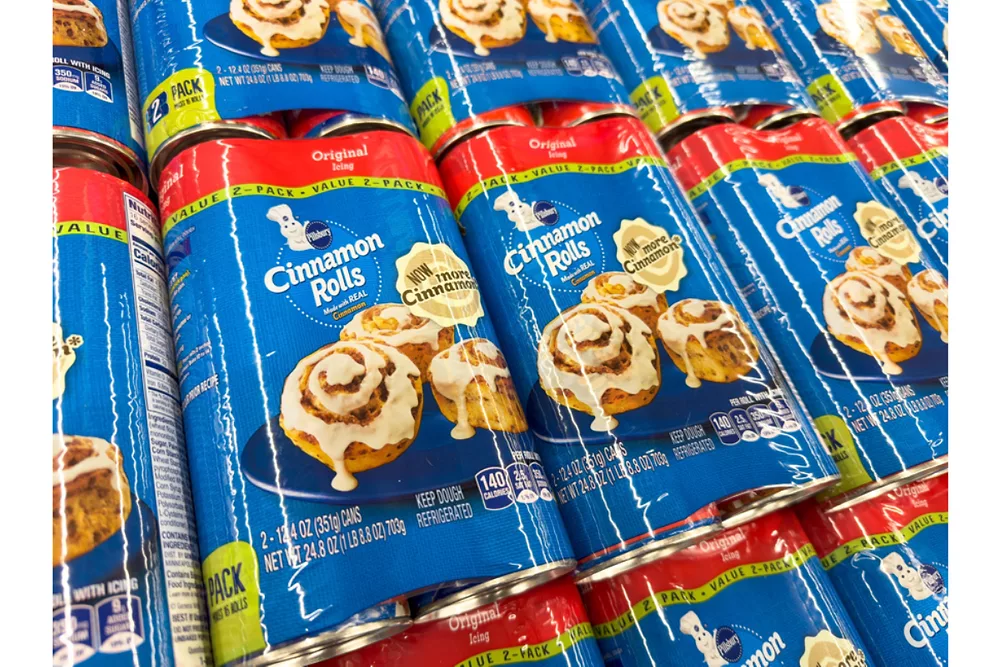
Categories showing a positive response to price adjustments include refrigerated dough, fruit snacks, salty snacks and soup, McNabb said.

Pound performance for Totino’s frozen snacks has dipped amid a price-pack conversion from a bag to a box to improve shelf visibility, General Mills said.| Photo: ©COLLEENMICHAELS – STOCK.ADOBE.COM
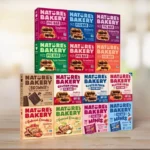
“In almost every case where we’ve made investments, we’ve seen the volume response that we are expecting,” she noted. “I’d also call out our snack bars, which pounds are down a little bit due to a key competitor comping a period of lower distribution, but the elasticities that we’ve seen on our snack bars are at or ahead of model. So we’re really encouraged by the performance we’ve seen.”
General Mills is “still working on” adjustments for the Totino’s frozen snacks brand, where pound performance has taken “a little bit of a step back” amid a price-pack conversion from a bag to a box to improve shelf visibility, said McNabb.
“So it’s hard to see exactly how things are performing and diagnose it correctly,” she explained. “I need a few more weeks to really be sure, once we feel like we’re through the conversion and we’ve got a better sense of the price investment. I really like the advertising that we’ve got going. We are talking about 10 rolls for $1. That’s resonating really well. And we just launched our Ultimate pizza line, which is this really great-tasting pizza — probably the best we’ve launched, maybe ever — and at an affordable price point that people expect. So I think the combination of a more clean read and focusing on the other levers of (brand) remarkability, we’ll be able to talk with more precision on Totino’s next quarter.”
Cereal continues to lag
Meanwhile, cereal has “still lagged a little bit of our expectations,” McNabb said, noting that cereal pounds are down about 3% versus the category’s historical rate of down 1% to 2%.
“The reason for the category being down is we’re seeing consumers move to more high-protein alternatives,” she said. “The good news for us is that as category leader, our plans are very focused on capturing those growth trends going into the back half (of fiscal 2026). And as a leader, we have a job to improve the category’s growth.
“If we look at our innovation, we are really leading there. Cheerios Protein is already a 0.9% share. That business is on track to be $100 million by the end of our fiscal year. And when you take how that’s performing in combination with some really good news and advertising on the core Cheerios franchise, in Q2, Cheerios grew dollars and pounds for the first time in three years.”
Granola remains a bright spot and is “what’s driving growth in cereal right now,” McNabb said.
“We have the biggest brand,” she said. “We’re the category leader, and it’s growing double digits. But granola is only about 6% of our business; it’s 12% of the category. So we’re coming in January with 10 new granola SKUs, really great-tasting products, really good nutrition benefits. We think that, focusing on the areas that are growing the faster and leaning into our leadership role, we’ll see both the category and our performance improve in the back half.”